◆ BLOGSpeculation, rooted in dataTAXONOMY · 17 MIN READ
If They're Real, Who Are They? A Field Guide to the Visitors
An introduction to the beings themselves: the greys and their castes, the small humanoids, the Nordics, the giants in white, the mantids, the plasma orbs, the reptilians, and the stranger things at the edges of the file. Drawn entirely from our own archive of experiencer testimony and declassified government documents. Not a theory of what the phenomenon is. A description of who, if any of it is true, keeps showing up, and how they seem to be arranged.
07 JUL 2026
FR-BEINGS-01
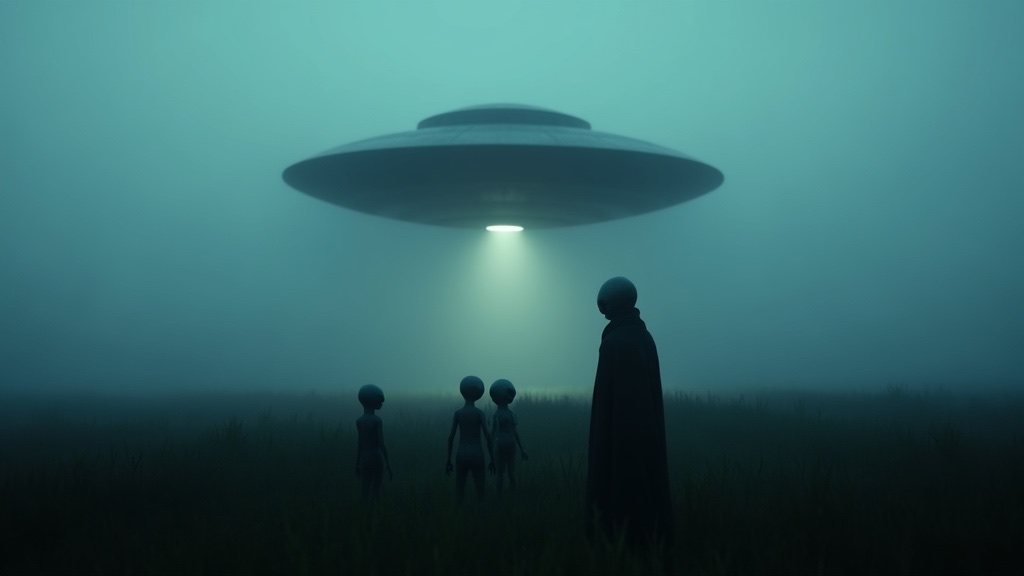
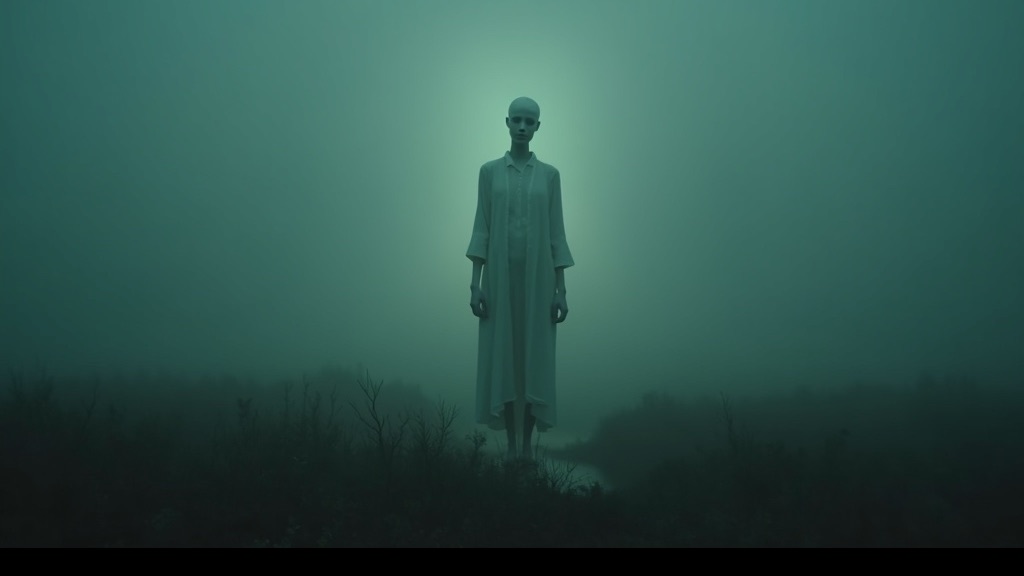
AI reconstruction · composited from witness descriptions · not evidence
Set the biggest question aside for the length of this article. Forget whether it is real, forget what it "means", forget the simulation and the psyop and the secret in the desert. Ask a smaller, stranger one instead: across the thousands of encounters people insist they have had, who exactly do they say they met?
We put that question to our own corpus. It now holds 1,785 separate descriptions of a being, drawn from 626 experiencer accounts, with another 114 in the government's own declassified files. You would expect chaos, a different creature in every story. What you get instead is a short cast list. The same handful of types keep walking back into the room, described almost identically by witnesses who have never met. The archive has grown by more than half since we last ran this count; the cast barely moved. Stranger still, they are described as if they are arranged in a hierarchy, with worker castes at the bottom and overseers at the top.
That convergence is the whole reason to treat the accounts as data. It is also exactly what a shared cultural script would produce. Hold both. Here is the cast, from the bottom of the ladder to the top. Where any of them might be from is a harder question, and its own article; this one is about who keeps showing up.
Counted across the archive, the whole cast is remarkably short — a dozen recurring types. The greys tower over everything. The reptilian, pop culture's favourite, sits in the lower half:
The cast, by how often it appears
Descriptions of a being, by type, across the archive
Greys346
Nordics223
Small humanoids180
Plasma / orbs94
Human-hybrids79
Apparitions61
Tall whites59
Synthetics47
Reptilians45
Mantids35
Cryptids33
Shadow beings18
Fractured Realities archive · 1,785 being-descriptions across 626 experiencer accounts
The Greys — not one race, but a chain of command
If the phenomenon has a default face, this is it: 346 descriptions across 238 of our sources, more than any other type by a wide margin. The single biggest thing our data corrects about the popular image is that "grey" is not one being. It is at least three, arranged in a hierarchy. The witnesses who describe them in the most detail do not describe a species. They describe a workforce.
The workers stand two to four feet: the classic little grey, an oversized foetal head, huge black almond eyes, a spindly body. Amaury Rivera's "Oomores" with their clown-pale skin and slow-blinking cow eyes. Samuel Rosario's Puerto Rico greys, very fragile, glowing greyish-white. The being lifelong abductees call "Skinny Bob", a bulbous head on a tiny body, moving like worker bees. These are the ones on the table, clinical and task-oriented, indifferent to human suffering. Several independent witnesses insist they are not a natural species at all but engineered servitors: biological drones (Rivera), an engineered species "made by the tall greys" over the last couple of thousand years (Erik Nanstiel), grown "as immune helpers and workers" (Rivera again, a different account).
The handlers stand four and a half to six feet and run the procedures: the scientist-engineer type Steve Colburn describes, Timothy Brandenburg's Indiana greys at six to seven. Same telepathy, same clinical manner, more authority. These are the foremen.
Then the tall greys, the "elders", from about five and a half feet up to eight, nine, even ten. Here the popular image fails and our data is richest. Nanstiel's unusually detailed account ties the height to age: younger tall greys around five and a half feet, elders at seven and a half to eight, with thin translucent mottled-blue skin over a dense bed of capillaries, a ridge running down the back of the skull, and no fat beneath the skin. A Pennsylvania witness describes one "as tall as a bay window", grey skin marbled with purple-pink veins, round black eyes "bigger than golf balls". Preston Dennett's "Mama" is a seven-to-eight-foot grey, nurturing and telepathic, remembered as the most beautiful creature the witness had ever seen. These are the ones giving instructions, not taking them.
The tall grey "elder" of the testimony: translucent mottled skin, a ridged skull, no fat beneath the skin. AI reconstruction · composited from witness descriptions · not evidenceCLICK TO ENLARGE ⤢
So the ladder the testimony builds is worker drones, then handlers, then tall elders. And the biology rhymes across unconnected witnesses in a way that is hard to dismiss. Multiple independent accounts describe greys that excrete waste through the skin: Nanstiel's elders, David Jacobs and Carla Turner's abductees, an anonymous molecular-biologist leak that adds a brain roughly a fifth larger than ours, an enlarged lung sac, and a faint ammonia smell. Their stated homeworlds cluster too. Zeta Reticuli recurs in Nanstiel and in the S4 briefing documents Bob Lazar describes. Sirius shows up in Elizabeth Richmond's Wyoming greys. Colburn names "an alliance of seven similar species within a hundred light years". And in one arresting Lyn Buchanan account, base personnel reported something they said they had never seen before: a grey female carrying a grey infant. The workers, it seems, reproduce.
This is where the greys stop being only a memory on an operating table and start turning up in the recovered-bodies column. Robert Hastings logs four-foot, large-craniumed greys at nuclear-missile sites. Varginha, Brazil, 1996: a grey-type being that reportedly survived its crash. The deeper seam is the crash-retrieval lineage that runs through the insiders: Philip Corso's Roswell "biologics", the Aztec bodies described by Frank Scully and later William Steinman, small, with disproportionately large heads, thin necks and webbed fingers, averaging around forty pounds. The Kingman and Long Island occupants. The 1950 Guy Hottel memo, a genuine FBI document describing three-foot humanoids in metallic cloth of very fine texture. The honesty flag matters here: some of this rests on sources who later recanted, and much of it is insider testimony, not a body on a slab you can visit. But the shape recurs across decades and unconnected tellers, small and big-headed and thin-necked, and it is the same being the abductees describe.
One last correction to the harmless-bureaucrats cliché: not all of them are. Hector Maldonado's Puerto Rico greys had sharp, shark-like teeth and were "mocking, playful yet threatening". Amaury Rivera's greys chase him down a dark road in recurring nightmares. The greys span from nurse to nightmare, but almost always from the bottom of whatever they are part of.
The small humanoids — the other short ones
The greys are not the only small beings, and this is the category the popular telling forgets. Set the classic grey aside and there are still 180 descriptions across 143 sources of other short humanoids: the dwarfs and "little men" of the older close-encounter tradition, who behave nothing like a clinical worker drone.
They are odd in a folkloric way the greys never are. The Lake Abitibi beings, two and a half feet tall, spoke a passable Algonquin. There are frog-faced dwarfs, hairy gnome-like figures, and the small robotic occupants of the Pascagoula abduction. Where the worker grey is cold and procedural, the small humanoid is often curious, mischievous, even clumsy. The distinction is worth holding onto, because it is the seam where "alien" testimony and much older fairy-lore run into each other, and where the newest cases and the oldest ones start using the same vocabulary.
The Nordics — the ones who pass
Move up and out from the abduction table and you meet the beings that look most like us. 223 descriptions across 158 sources report Nordics: tall but human-scaled at six to seven feet, athletic, blond, blue-eyed, often outright beautiful, in flowing robes or seamless metallic suits. The defining detail is not the look. It is the placement. Again and again they are reported walking among people. Two identical six-foot-nine women in flannel shirts in the summer heat, telepathically screaming stop into a witness's skull. A Scandinavian male-model figure on Orcas Island who greeted the researcher Brent Friedman by name and told him to turn around and walk the other way. A tall blond in Bolivia speaking perfect, accentless Castilian Spanish. The uncomfortable implication is that they blend in on purpose.
Their origin stories are the most vertiginous in the file, because they so often circle back to us: people from the Pleiades, from Lyra, from "planet Ka". One account skips the stars entirely: "possibly future humans". The landmark strand is the alleged 1964 Holloman Air Force Base contact, in which a tall being in an Egyptian-style headdress reportedly shook hands with US generals. A note belongs in every retelling: the famous photograph attached to that story was later exposed as a picture of a British Museum statue. The account persists. The image was a fake.
The Tall Whites — the giants in white
Keep this seam visible, because the data does. The Tall Whites are not simply tall Nordics. 59 descriptions across 50 sources report a separate type: seven to fifteen feet, stark white or silver, and cold where the Nordic is warm. The morphology is consistent. Bone-pale or luminous skin, white-blond hair, frequently hooded or suited or helmeted, sometimes glowing, with long thin white fingers. One Leningrad witness noted no fingernails. They communicate telepathically, usually in a flat monotone. Where the Nordic feels like a cousin, the Tall White feels like an inspector.
The archetype is the Smedjebacken, Sweden 1968 case: eight-foot figures in white overalls and hoods, round heads, near-invisible mouths, huge black hypnotic eyes, each carrying a white briefcase and floating just above the ground.
Smedjebacken, Sweden, 1968, as the witnesses tell it: hooded figures in white, briefcases in hand, floating just above the road. AI reconstruction · composited from witness descriptions · not evidenceCLICK TO ENLARGE ⤢
In Wales, the Combs family's Ripperston Farm "Thing at the Window" was an eight-foot figure in a glowing silver suit and a black-visored helmet. Chris Bledsoe, one of the most-documented modern experiencers, describes white beings with red eyes that telepathed "We mean no harm." At the top of the height range they shade into the giants tradition: Billy Meier's fifteen-foot "Daniel", the red-tinged beings tied to the 2023 Peru reports, said to emerge from centuries-long underground hiding places.
Two things keep them from slotting neatly into the grey hierarchy. Their role is ambiguous. Some are authoritative guardians "for thousands of years", like the Australian "Sky People" who claimed to be closer than we think. Others are the opposite: in Buchanan's remote-viewing account, a class of tall beings "pale as could be, muscled like Schwarzenegger" who were "dumb as a rock", menial workers serving the greys, and, Buchanan is careful to add, not Nordics. Their stated origins skew local. The Moon, underground, "closer than you think", rather than a named star system. The Tall White is the type most often described not as a visitor at all, but as something that was already here.
The Mantids — rare, and running the room
It would be easy to treat the mantids as a footnote, and the data half-invites it: they are among the rarest named types in the whole file, 35 descriptions across 29 sources, still fewer than the reptilians. But rarity is not the story. Wherever a mantid appears, it is almost always the one in charge.
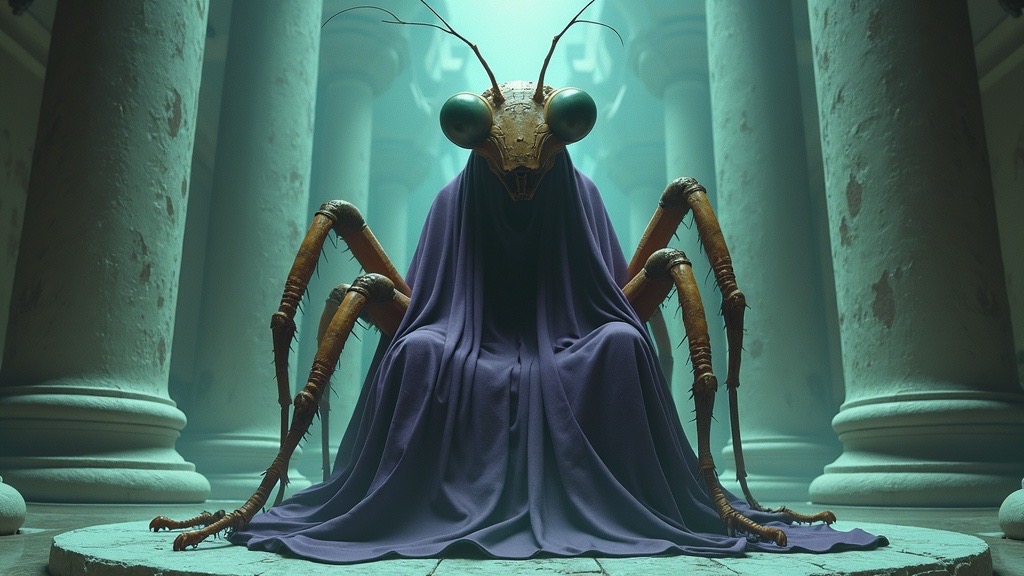
They are unmistakable. A large triangular head, enormous eyes witnesses keep sizing at "basketballs", long segmented arms, a praying-mantis stance. Heights run from a three-foot "small" mantid up to towering fifteen-foot figures. Kevin Kamen describes fifteen-foot mantids on white stone thrones on a dais, sometimes in purple cloaks, telepathic in perfect English, "benevolent but terrifying, overseer-like royalty". A schoolteacher in O'Fallon, Illinois watched a fifteen-foot "man on stilts" with a triangular head walk down the middle of the street at four in the morning. A Brazilian witness describes a two-metre grasshopper being levitating above the sand.
The mantid as witnesses place it: robed, enthroned, overseer-like. AI reconstruction · composited from witness descriptions · not evidenceCLICK TO ENLARGE ⤢
They cross-corroborate in a way most of the corpus does not. A Montreal police officer's photograph of a three-foot mantis-like being independently matches a drawing made by the abductee "Sarah". Buchanan, a trained US Army and CIA remote viewer rather than a walk-in witness, describes a praying-mantis insectoid casually working alongside humans at equipment inside a government facility. There are mantis figures in Anasazi rock art. And the detail that most resists dismissal: the defence scientist Robert Sarbacher, a Pentagon research consultant, described recovered craft operators as "constructed like certain insects observed on Earth", extremely lightweight to survive the deceleration. When a rock-art panel, an abductee's sketch, a remote viewer and a Pentagon consultant independently reach for insect, that is a stranger kind of agreement than folklore usually produces.
The role is the through-line, and it earns them a place at the top of this article rather than the bottom. In several independent accounts the mantids sit above the greys. The veteran abduction researcher David Jacobs, relayed by Timothy Alberino, reports that the little greys may be the engineered creations of a mantis-like species he calls the "insectolins", described as managerial and in charge. Lay that beside the grey caste system and a structure assembles itself out of unconnected testimony: mantid overseers, then tall grey elders, then grey handlers, then worker drones. Whether that is a real chain of command or the most elaborate shared archetype our species has produced, it is a far more specific, and far more falsifiable, claim than "aliens are visiting".
Set out as a diagram, the structure the testimony keeps implying looks like this — few at the top, many at the base:
The chain of command
Mantidsthe overseers
▼
Tall grey eldersgive the instructions
▼
Grey handlersrun the procedures
▼
Worker greyson the table
The hierarchy witnesses describe, assembled from unconnected accounts
Plasma, orbs, and "biologics" — the category eating the others
Then there is the group that does not fit the ladder at all, because it often has no body: 94 descriptions across 73 sources of glowing spheres of plasma, blacker-than-black orbs radiating dread, softball-sized balls of white light that pass through solid walls and knock a person unconscious with a touch to the forehead. Blue orbs rising out of the Pacific at Esalen. A sentient crystal orb that one investigator called Sylvia, its swirling interior "looking back". When the Pentagon whistleblower David Grusch and others describe recovered craft occupants, the word they reach for is not alien but "biologics", in one account "possibly cybernetic, or printed flesh with an AI mind".
These entities behave unlike any of the others: they are responsive to consciousness. Investigators in the Skywatcher group report them turning highly benign when approached through calm, love-based intention, and menacing when the intent is hostile. This is the category where being, craft and pure intelligence stop being separable, and it is the one dragging the whole subject away from biology toward something stranger. Since our last count it has grown faster than the archive around it.
The Reptilians — famous, and less absent than we thought
Now a correction to our own earlier reporting. The reptilian is probably the most famous alien "race" in popular culture: scaled, seven feet tall, slit-eyed, secretly running the world. When we last wrote this guide the reptilian was the thinnest type in the archive by far, six accounts from three mostly second-hand sources, and we said so plainly. We also said the count refused to grow.
It grew. With the corpus now several times larger, the reptilian sits at 45 descriptions across 37 sources, more than the mantids, and the count has kept climbing with each refresh. In hindsight some of that earlier near-absence was small-sample noise. What survives the correction is the shape of the gap rather than the gap itself: the reptilian is still under-represented relative to its enormous cultural footprint, and a good share of the accounts remain indirect. David Icke relaying unnamed witnesses. An anonymous interview with a self-described reptilian called "Lacerta". Zulu folklore about the "Chitauri", via Credo Mutwa. "Astral reptilians" met during out-of-body states. First-person, on-the-record reptilian encounters are still comparatively scarce. The lesson is one worth keeping for every number in this piece: a striking absence in a small corpus is a hypothesis, not a verdict, and more data can quietly overturn it.
One odd detail is worth keeping. A winged-serpent emblem is reported on the uniforms of beings in two separate, unconnected cases: the small spongy-skinned beings of the Herrmann encounter, corroborated by Travis Walton, and Herbert Schirmer's crew. Reptilian insignia recur even where reptilian bodies do not.
The edges of the file — where "alien" stops fitting
Four categories break the extraterrestrial frame entirely, and together they are now a substantial slice of the archive.
The apparitions, 61 descriptions across 56 sources: angels, hooded figures, robed "monks", the dead. The taxonomy blurs here into religion and the paranormal, which is precisely the point. Witnesses reach for angel and demon as readily as for alien, and often for the same encounter. The synthetics, 47 across 43: biological robots, box-headed figures, motionless "robotic women", the printed-flesh idea surfacing again. Several accounts describe beings that seem manufactured rather than born, which folds back into the engineered-worker thread running through the greys. The cryptids, 33 across 23: skinwalker-type wolves, flatwoods-style monsters, large hairy things aboard or beside craft, the seam where UFO testimony meets Bigfoot and the "high-strangeness" tradition. And the shadow beings, 18 across 17: black, featureless, soulless figures, reported in the same encounters as craft and lights often enough that at least one base is described as suffering both at once.
Two more bridge to separate investigations. The human-hybrids, 79 descriptions across 64 sources, Lily and Sarah and the half-human blonde in the snow-white jumpsuit, are the subject of their own dossier. And a motif that has surfaced only recently, worth flagging because it may matter more than its small count: across a handful of independent accounts, beings deliver a specific warning, that artificial intelligence is a danger to humanity. Whatever else is going on, some witnesses now come back with a message tuned to this decade rather than the last one.
When did they start showing up?
The timeline runs deeper than most expect. There are pre-modern cases: a manoeuvring light over Limerick in 1909, a claimed 1933 crash near Magenta, Italy, years before Roswell. But the hinge is 1947: Kenneth Arnold, Roswell and Corona, even "Martian contact" letters to the president. Modern being-lore effectively begins that summer.
The 1950s brought the contactees, whose visitors were almost all the beautiful, human-passing kind, not greys. The greys' era begins in 1961, with Barney and Betty Hill, the case that burned the almond-eyed face into the public mind and opened the age of abduction. Mass daylight encounters mark the decades that follow: the Westall school in Australia in 1966, the Ariel School in Zimbabwe in 1994, where dozens of children independently described the same small dark-eyed beings. In our own decade the plasma and "biologics" accounts arrive and begin pulling the whole subject in a new direction.
What the government's own files say
One last tier, because it is our strongest. The declassified FBI, CIA and Department of War releases do not just log lights in the sky: 114 of them describe the occupants. And they lean, overwhelmingly, toward the human-passing kind: "Korendian humanoids, indistinguishable from humans", recurring across multiple FBI serials; Adamski's Alpha Centaurian; a "ravishing female commandant". There is a thinner seam of small-being close-encounter cases, the French files on Valensole and Cussac, the Socorro figures, references to "Roswell humanoid cadavers near a space-glider frame". And the modern capstone, sitting in the official record: a file noting alleged remains of non-human beings displayed to Congress.
What the documents establish is narrow but real. Non-human beings are in the government's own paper, described and filed, not merely whispered by experiencers. What they do not do is tell you which account is true, and their skew toward the tame, human-looking contactee era is partly an artefact of what gets released. The best material, by every insider's account, is not in the folder you are allowed to read.
The honest floor
Strip this down to what survives scrutiny and it is smaller than a believer wants and larger than a sceptic will admit. It is not proof that anyone met anyone. It is this: across hundreds of unconnected witnesses and decades of files, the descriptions do not scatter. They converge on a short, stable, oddly well-organised cast. Worker greys who process you and elder greys who oversee them. Little men out of much older folklore. Nordics who pass for you and giants in white who may never have left. Mantids who seem to run the room. Orbs that answer your intentions. And the reptilian that everyone has heard of and comparatively few in our files have actually met.
The convergence is real. So is the counter-reading, and this year it is louder than before: a great many accounts in our own corpus insist these beings are not beings at all, but a story someone built, a psyop wearing a face. Whether the cast is the fingerprint of something real, or the most successful shared fiction our species has ever told, our data cannot decide for you. But it can tell you, with unusual precision, who the story is about, and who, in it, appears to be giving the orders.
You decide.
Fractured Realities indexes primary testimony on the UAP phenomenon and its adjacent subjects for study, not persuasion. Every claim above is attributed and searchable; corroboration varies and is noted. Read critically. That is the entire point.