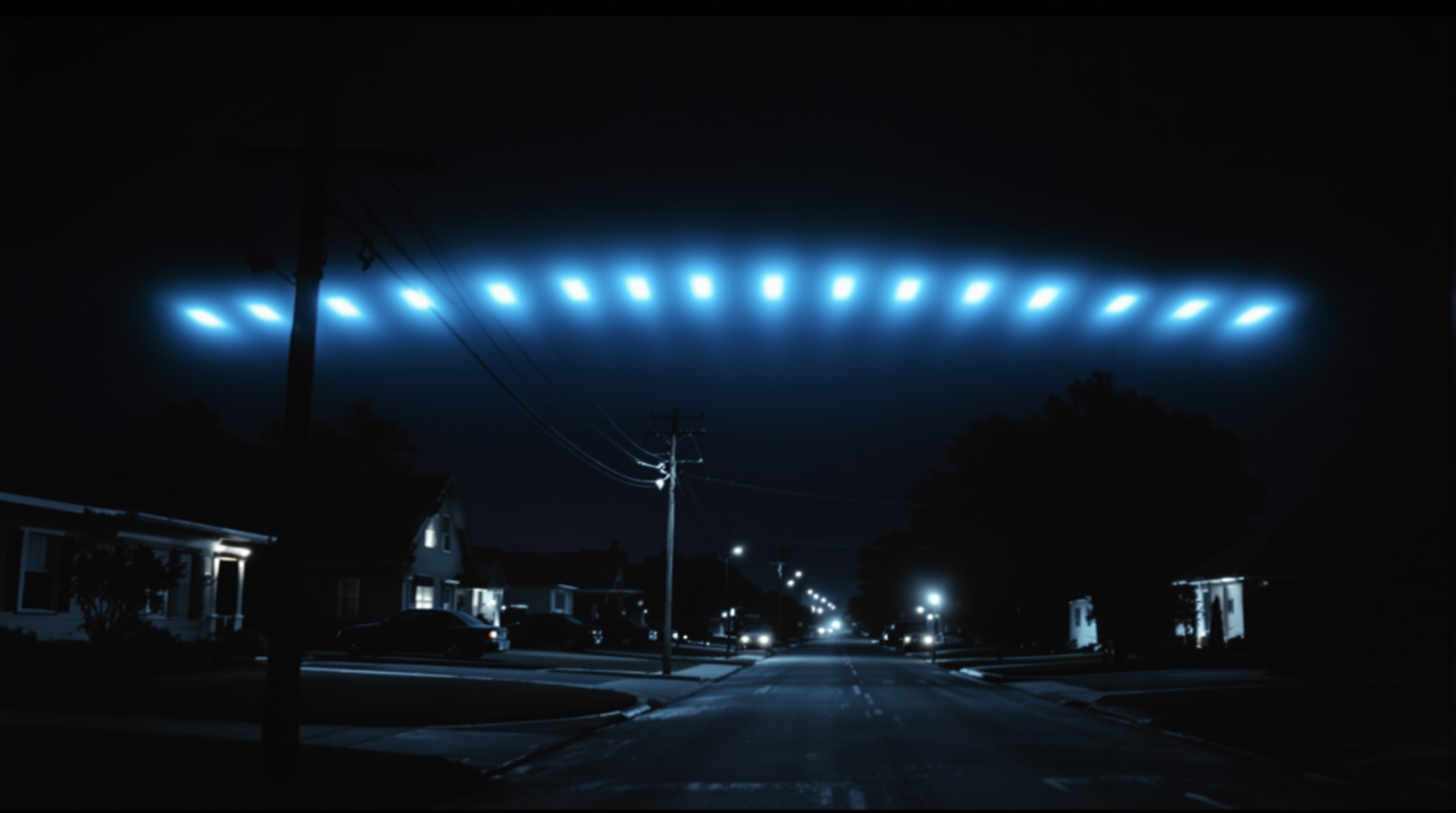
Over several weeks in August and September 1951, residents of Lubbock, Texas, reported V-shaped formations of soft lights crossing the night sky at speed. Among the early witnesses were several professors from Texas Technological College, whose standing lent the reports weight. A student, Carl Hart Jr., photographed the formations, producing images that circulated widely and were examined by investigators.
What is on the record
The case is unusually well attested for its time: multiple credible witnesses, including faculty, and a set of photographs, all entered into the US Air Force's investigation. One explanation the Air Force weighed was light reflecting off the undersides of plovers as they passed over the city's new street lighting. Some found that plausible; others felt it did not account for how the formations looked or moved. The photographs have never been shown to be faked.
Why it sits where it does
Lubbock graded L4 here until a 2026 audit checked its linked documents in full text. The Condon Report chapter attached to it mentions Lubbock once, in passing, across a hundred and forty thousand words, so it doesn't count as corroboration. A CIA file does summarise the case in substance: four professors and hundreds of residents watching formations of bluish-green lights, Carl Hart Jr.'s V-formation photograph, and Ruppelt's view that the photos were never proved either a hoax or genuine. But it reads as a summary of published accounts, so it counts here as reporting, not as an official record of the inquiry. The case now grades L3 on our ladder, the tier for independent named witnesses. Its three claimants are the professors as one group and Carl Hart Jr. twice over, since the freshman photographer in Captain Edward J. Ruppelt's 1952 presentation is the same student. So the independence is between the student and the professors. That is a statement about our sourcing, not about the event, which was famously investigated at the time. Papers from the Air Force's Lubbock inquiry have since been linked in our document set but are not yet counted as corroboration here. What the record holds is that credible observers, including university faculty, repeatedly reported formations of lights, that a student photographed them, and that the Air Force studied the case without conclusively settling it. What the lights were is not resolved here.