The Sanxingdui Stalk-Eyed Mask
12th–11th century BCE · Guanghan, Sichuan · China
WHAT IT IS
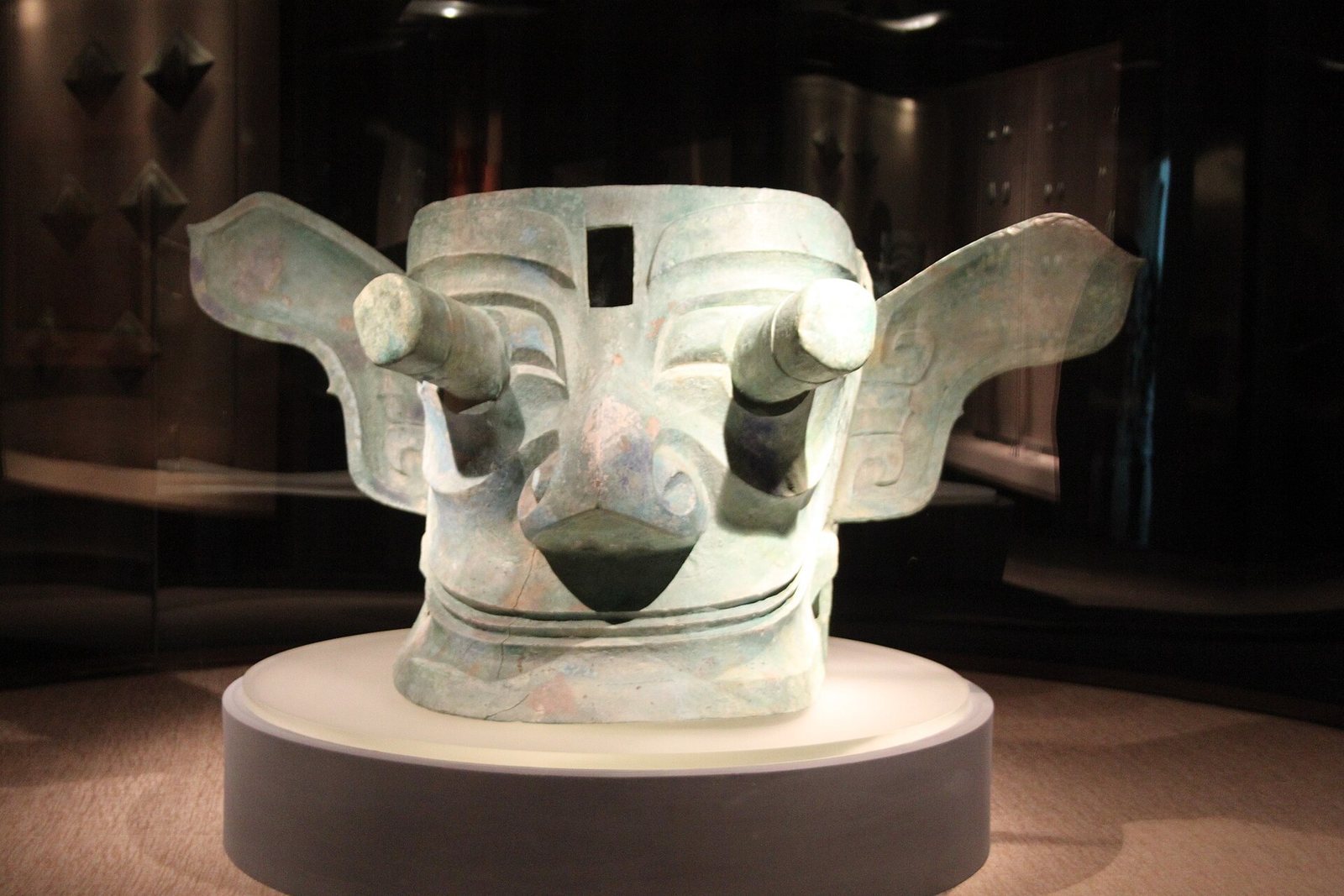
A bronze face with cylinder eyes jutting out like telescopes and ears like wings. Its discovery revived talk of an alien civilisation in ancient China.
THE ALIEN READING
The eyes, the ears and the grin look like nothing in Chinese art before or since; the South China Morning Post reported in 2021 that new pits had revived 'wild theories of an alien civilisation'.
WHAT THE RECORD SAYS
Ancient chronicles describe the legendary Shu ancestor-king Cancong as having protruding eyes. The masks are ritual objects burned and buried in sacrificial pits, and archaeologists call the alien idea unsupported.
WHERE IT STANDS
Explained. Historians and archaeologists account for what it shows. The alien reading is a modern one.
STATUS IS OUR CURRENT ASSESSMENT, NOT A VERDICT · REVIEWED 3 OCT 2026
THE RECORD
- DATE
- 12th–11th century BCE
- PLACE
- Guanghan, Sichuan · China
- MADE BY
- Sanxingdui culture (ancient Shu) · Sanxingdui Museum
- MEDIUM
- Sculpture
- TECHNICAL
- Cast bronze · Sacrificial pits of 1986 and the 2020s · pit dating usually given as late Shang period